
Review for Global Conflicts: Palestine

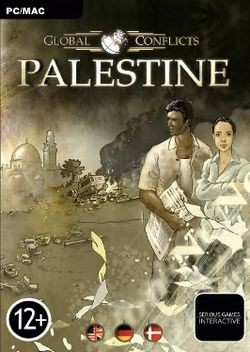

Have you ever complained about how biased the international news media really is? Well, in Global Conflicts: Palestine, instead of just reading the news, you get to write it the way you want it read.
Like the topic it addresses, this game has surprising depth, though it is not an adventure game in the traditional sense. Global Conflicts: Palestine plays more like an educational program, setting the player in contemporary Jerusalem as a freelance journalist covering the Israeli-Palestinian conflict. Multiple newsworthy events occur during this time, and the object for the player/reporter is to cover these stories for an eager public.
After choosing to play either as a male or female reporter, the start of each mission requires the player to select a particular publication (an Israeli, Palestinian, or European newspaper) for which to write an article covering the events. Each mission emphasizes a different aspect of the conflict, such as the role of settlers, the use of force by the Israeli Defense Forces, or suicide attacks by Palestinian militant extremists. Besides the overall context, the missions have no relationship to one another. A mission ends when the player decides to submit the article to the editor of the particular newspaper assigned for that portion of the game.
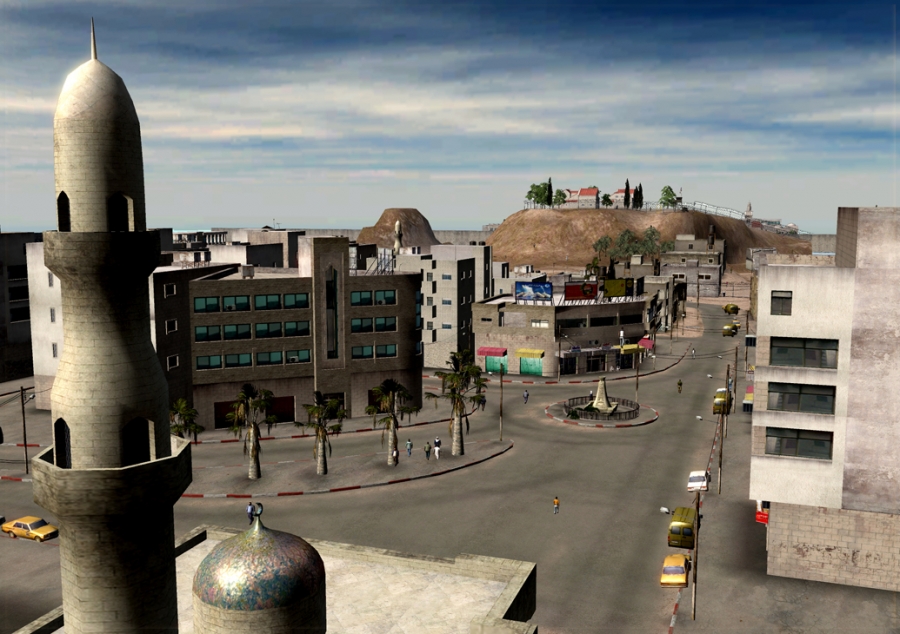
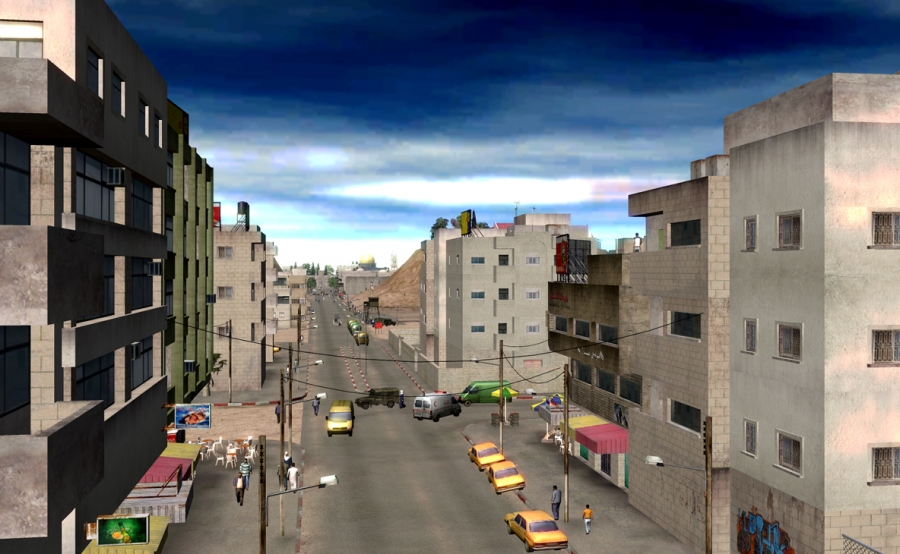
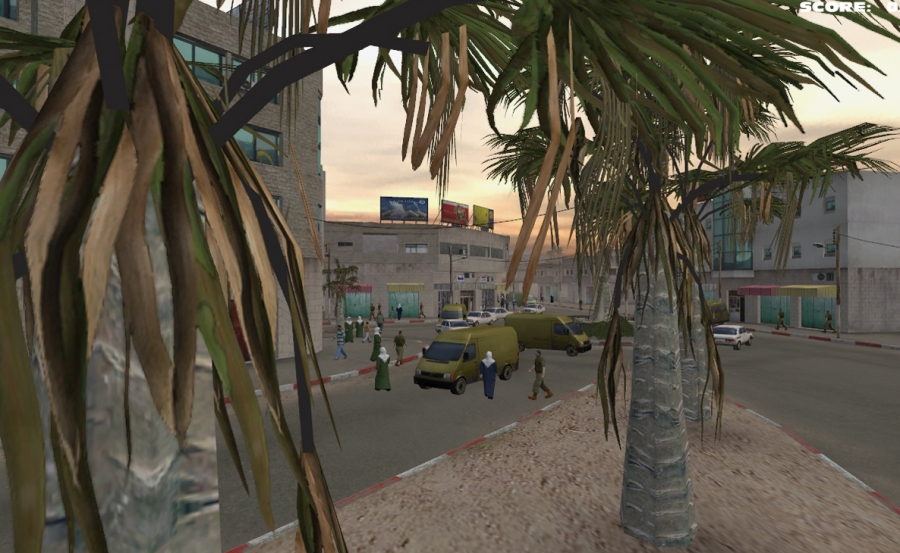
The game takes place in a sprawling 3D world using a bird’s-eye view. The default camera perspective in the game is fairly distant, but the player has the option to zoom in closer to the character. However, because of the large map, the default wide-angle is probably the most convenient. Using a point-and-click interface, the game permits the reporter to move freely between Jerusalem and outlying regions that include a Palestinian area and an Israeli settlement. There are no items to interact with, nor really any new areas to explore, save on one brief occasion. Instead, almost the entire game is spent simply seeking out sources to talk with and cite in your articles. There is a map accessible at any time, where the locations of sources are clearly marked. While not interactive, this map provides invaluable service as a reference point during the game, as there are many alleys and streets where one can get easily lost.
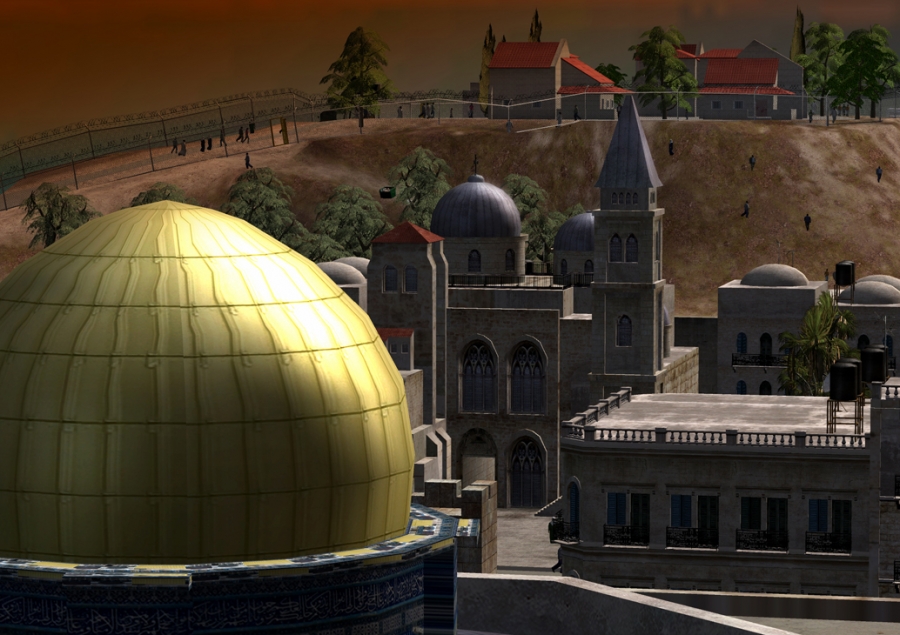
The exterior graphics aren't overly detailed, but nor are they outdated. Like the dialogue, the visuals are meant to be realistic and give an authentic feel to how Jerusalem is genuinely experienced. Everything from the minarets atop the mosques to the flags above the markets help establish a realistic setting. However, the characters are drawn in a way reminiscent of the early days of 3D, particularly during interviews, as the movement of the interviewees looks a bit choppy when the reporter is looking at them up close.
You'll be seeing a lot of those close-ups, too, as you must engage in a variety of conversations, interviewing individuals from both sides of the conflict in order to acquire the information you need for your article. The game provides a myriad of people to talk to in the course of your research. Some of the interviewees are consistently available from mission to mission, while others are specific to one.
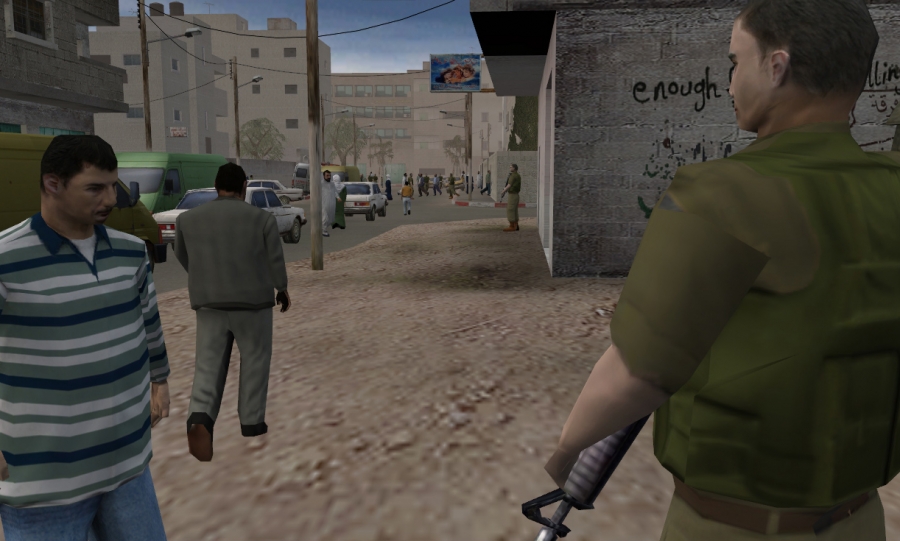
The conversations feature no voice acting, but they are fully interactive, working via dialogue trees familiar to adventure gamers. Everything that is said by an interviewee can be written down in the notebook for use as a quotation in the article. The player can collect as many as five quotations in total to carry in the reporter's notebook. [Note: a subsequent patch for the game has increased this total from five to fifteen quotes.] It is from this bank of notes that the articles will be constructed. Since the player will be interacting with numerous sources, and cannot go back to collect a previous quotation, caution should be exercised, and routine quotations should be deleted.
The collection of these quotations and your responses to the interviewees are critical in the construction of an article. Each newspaper has its particular perspective and ideological slant, and these expectations are at the heart of Global Conflicts. The player must make a judgment based on whether he wants to appease or create controversy with his audience. Similarly, the player also must decide on which supporting picture to incorporate in the article. These photos have been pre-selected by the game, and are not affected by the player. Each picture depicts the conflict from a different angle, and will elicit either sympathy or outrage.
The articles also have an effect on the “standing” of the reporter in the community. Essentially, this is the willingness of individuals from each community to talk to you. After each successive article, sources from both sides of the conflict will judge you based upon the perspective of previous articles. Your standing in each community (Israeli and Palestinian) is more or less inversely proportionate to the other. There are some exceptions, but for the most part, potential sources are going to perceive you as being sympathetic to one side or the other. There are three approaches you can take when this occurs. You can either: A) continue to write for that particular newspaper, ensuring your perspective continues, and therefore increase standing in one community over another; B) lie to each side, telling them that the next article will look upon them more favorably; or C) perform little favors in each community, such as delivering a package (not a bomb) to a wedding, or taking a message to a family member of a source. If you choose the latter, it doesn’t take long before you are as well regarded as before.
One of the interesting things about Global Conflicts is the chance for the player to become part of the action, even if not directly. For example, the player witnesses multiple suicide attacks, one that results in a personal tragedy (not to be revealed here).
I played Global Conflicts: Palestine from start to finish three times. In order to test the limits of the game, in each one I attempted to sabotage the reporter’s career by ruining his reputation, placing him in dangerous scenarios and selecting James Bond-type responses to ensure maximum irritation on the part of interviewees, then trying to resurrect my standing. What I discovered was that it was virtually impossible to be unsuccessful in source cultivation. That is probably because the game is really meant more for an educational audience than a recreational one.
While for most this will be considered a slow-playing game, as a graduate student in political science, I applaud the architects of this game in their incorporation of real-life scenarios into the storyline. The developers clearly did their homework, and did not impose stereotypes or anachronistic dialogue, which is easy to do in a game that tries to tackle a contemporary subject as complicated as the Israeli-Palestinian conflict. The characters have appropriate mindsets based on their backgrounds, and don’t exaggerate in an unnecessary or unrealistic way.
What makes this game difficult is the intellectual challenge of constructing a well-researched, relevant article appropriate for the audience sought. Since you can only carry a limited number of quotations in your notebook at a time, the selective incorporation of quotations from the various interviewees make the possibilities for resulting articles fairly large, so you'll constantly be assessing your information and weighing its importance to your feature. The game rewards those who try to make the most of each mission. The player’s experience score will increase and his standing in the community will remain mostly constant. Articles that show depth and experience with an implied hint of controversy garner respect (even grudgingly so) from each side, regardless of which paper to which it is submitted.
However, it is possible to go through each mission quickly. All one needs is the minimum number of quotations, and a few cursory interviews on each side. The player could select a single paper to write for, continually write heavily biased stories, and find that his standing in each community would remain steady. Yet doing so makes it difficult to cultivate insightful interviews if people think all you do is write incendiary propaganda pieces. Players that do this kind of superficial research and don't seek out tough-to-find sources, or make thoughtful decisions on which quotations and photos to incorporate, will find their articles buried on page 7 or 8. While this has little effect on the overall outcome of the game, it does affect the player’s ability to improve their experience level.
Global Conflicts: Palestine is available now for purchase on the Serious Games website. It can be purchased as a digital download or as a physical copy, priced accordingly. Fortunately for a game as unique as this one, a playable demo is also offered, giving players the chance to try it first. For obvious reasons, the people most likely to be interested in the game will be those attracted to the subject matter, and those people should also check out the educational companion website.
Players who decide to pick up Global Conflicts: Palestine should be reminded that this is not a traditional adventure game with the usual emphasis on puzzles and exploration, but more of a simulation in which the puzzle itself is in seeking out and crafting relevant articles. As a current events title that tackles a difficult topic, it does so with intelligence and style, and an open-mindedness towards the various cultural elements involved in the Middle East. By presenting multiple sides of the same issues and leaving the choices up to the player, the game succeeds at creating awareness and hopefully promoting a deeper understanding. The rather sedate pace and singleminded gameplay means this is a title that will have a limited appeal, but for anyone with an interest in the topic or a desire to try something new, Global Conflicts: Palestine may just be worth a look.