
Review for Dear Esther

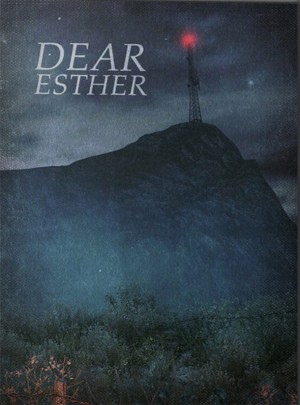


Adventure gamers are no strangers to the endless debates over genre definitions, but it’s rare that we ask the even more fundamental question, “What is a game?” Dear Esther, from developer thechineseroom and level designer Robert Briscoe, is an extraordinarily strange, brave, and above all beautiful experience. Strange because it is a bizarre work of surrealism, brave because it tries things few other games have ever dared, and beautiful because it succeeds, at least at what it attempts to do. Originally released in 2008 as a free mod for Half-Life 2, Dear Esther became a cult hit and secured both the funding and talent necessary for an enhanced commercial re-release. The core game is exactly the same, but now features the polish that comes with a larger team and budget. Most notably, the graphics have been completely reworked with stunning results.
Dear Esther is the brainchild of University of Portsmouth researcher Dan Pinchbeck. It is, at heart, an exploration of the possibilities of nonlinear storytelling in games. The player controls an unnamed, unseen protagonist who lands on an unnamed island. There are no inventory items, no NPCs, and no puzzles. You have no choice but to explore the island, and as you do so, snippets of narration play out in a semi-random manner, giving a vague and haunting context for your presence there. The narrator is, presumably, reading from letters written to the titular Esther, and the topics sway from memories of a car crash to the journal of one of the island’s previous explorers to the nature of the mysterious culture that originally inhabited the area. To say any more would be a disservice to your own sense of discovery, as piecing the various plot threads together (inasmuch as they ever can be pieced together) is a large part of the experience. This is a game that takes place as much in your imagination as it does onscreen.
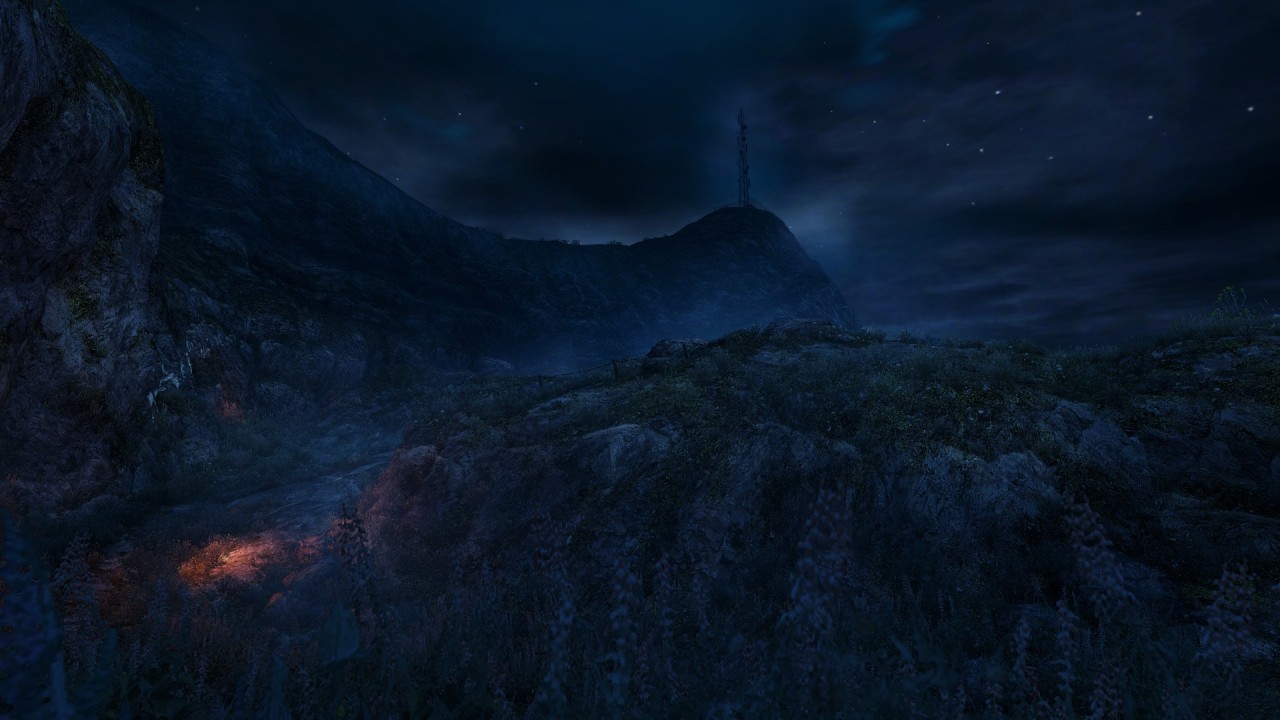
But here we return to the question above. Is it really a game at all? This title strips away all familiar conventions of “gameplay” and focuses entirely on atmosphere and presentation. The only carrot on a stick drawing you further in is a blinking red light in the distance and an innate sense of curiosity. That may sound shallow, but the experience of “playing” Dear Esther feels profoundly deep and satisfying, assuming you can shed your old notions of what a game must be. If that doesn’t sound interesting to you on some level, then this may not be the experiment for you. But for anyone who wants to experience a brilliantly-crafted work of interactive art, you will certainly be rewarded.
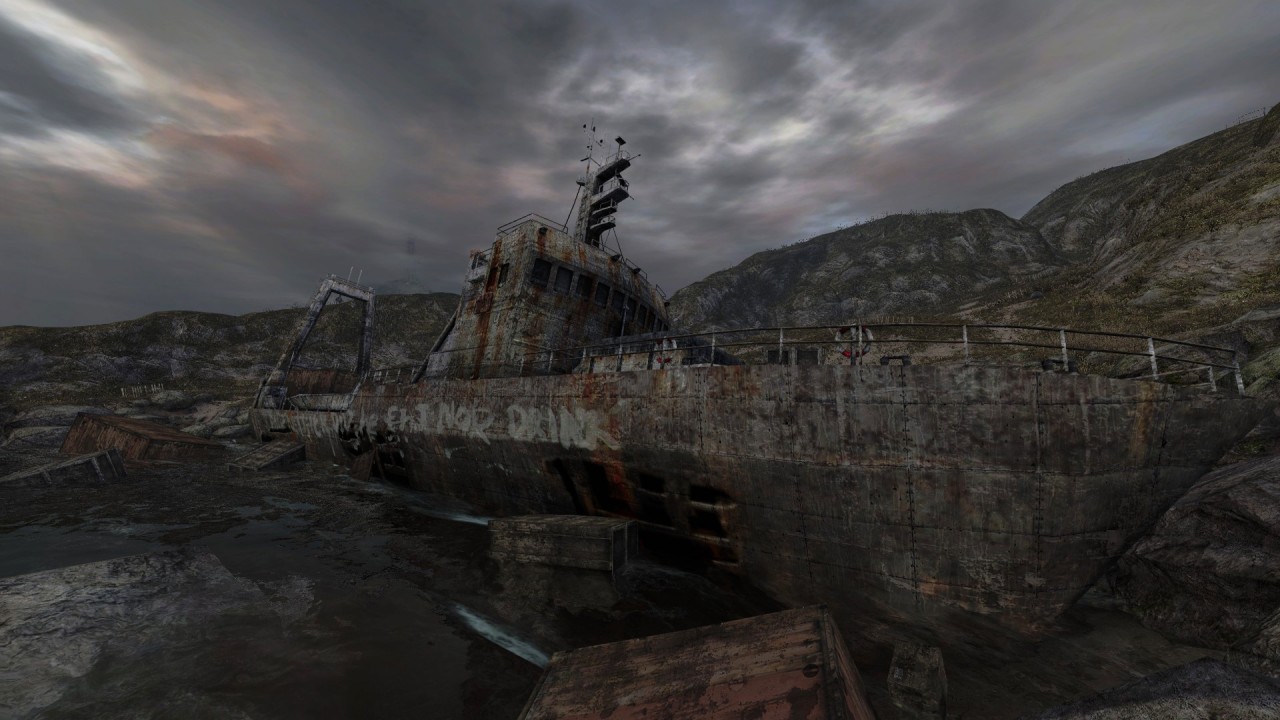
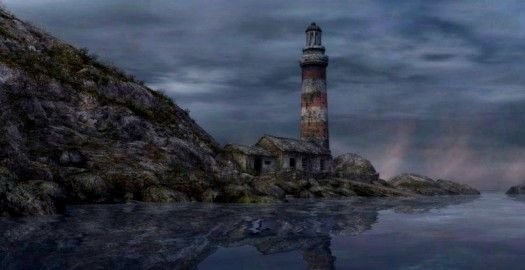
It’s hard to believe that what you’re looking at upon first starting Dear Esther is the eight year-old Source engine that has powered every Valve Software release since Half-Life 2. While Valve’s games have always looked great, designer Robert Briscoe has lapped them all with his superb remake of the original mod’s eerie, melancholy island. The first game had decent enough graphics, but bringing on a talented 3D design artist this time around paid off handsomely. This is perhaps the most beautiful and immersive setting I’ve ever seen in a game. That may sound hyperbolic, but just take a moment to soak in some of the screenshots in our image gallery. Go ahead, I’ll wait.
See what I mean?
Any given snapshot from this game could be framed and hung in a museum as a masterful landscape piece. There’s a reason the remake took years rather than months despite being set on a single small island. The original mod was rough around the edges but still full of its own earnest beauty, the island dotted with all manner of quietly mysterious or poignant discoveries—a pile of stones marking a grave behind a shed, the skeletal remains of a centuries-old shipwreck—but the commercial facelift allows it to truly shine. Now the island has both a dour realism and a gorgeous, painterly touch, and each little detail—every tuft of vegetation, every strange outcropping of rock, every splatter of luminescent paint on a cave wall—has been lovingly crafted with an astonishing eye for accuracy and artistry. The end result is remarkable, making the simple act of walking around and looking at everything a joy—which is good, because that’s pretty much all you can do.
Not much has changed in terms of sound this time around, though to be fair, not much needed to be. Ambient effects are comprised mostly of howling wind, sloshing waves, and crumbling rock, which more than suffice to immerse you deeper in this desolate world. It sounds exactly like a mysterious, abandoned island should. The narrator, however, played by voice actor Nigel Carrington, steals the show by tackling the readings in all of its scattershot surrealism. Whether calmly retelling a historical anecdote or ranting through a painkiller- and grief-induced fever, the narration feels emotionally raw and convincing. Dear Esther’s score is all the more powerful because it is sparsely used. Most of the time the only audio is the natural soundscape of the island, but composer Jessica Curry has created an austere, pensive mood with minimalist arrangements of piano, strings, and a few foreboding synths. The timing of the music is impeccable, bringing a heightened sadness to some scenes and urgency to others, especially as you near the climax.
Normally this would be the point where I talk about such things as puzzles and interface, but there aren’t any puzzles and there is no interface to speak of. Everything is stripped down to the bare essentials, and the only goal is ever finding the next path to take. Some areas give you a fair amount of freedom to explore rather than railroading you towards the next destination, though in the end there is only one path in and out of an area. You would do well not to hurry but to take your time exploring (not that you can rush, since you can only move at a leisurely walk). Controls are limited to typical WASD first-person movement with no jumping, crouching, or even a ‘use’ button. There are no items to collect, no slider puzzles or logical headgames. The only puzzle plays out in your mind as you attempt to piece together scraps of narration and imagery: Who is Esther? What does the explorer’s journal describe? What is this sickness the narrator speaks of? And so on. By the end of your first playthrough you’ll likely have more questions than answers, but as multiple playthroughs are rewarded with different narrations, give the game a second or third go-around and you’ll have a pretty good handle on things. Yet be warned: this is a surrealist game, so some of the answers are deliberately vague.
In addition to being an intellectual joy, Dear Esther strikes some remarkable emotional notes. Between the gorgeous graphics, virtuosic writing, emotive narration, and poignant score, I’m not ashamed to admit to having choked up on at least one occasion. This is a profoundly sad game closer to a T.S. Eliot poem than our beloved adventure classics, yet it leverages the interactivity of the medium (however minimally employed here) to achieve an effect that only a game can have on a player. The ten dollar price tag may seem high considering your first stroll through the game is only about an hour long, but for those willing to plunk down, Dear Esther is a wholly unique and remarkable work of art that will capture your mind and your heart.