
Review for Quest for Glory III: Wages of War


_capsule_fog__medium.png)
When game designers Lori and Corey Cole first devised the Quest for Glory concept, they envisioned it as a sequence of four games. While the instalments weren't completely thought out beforehand, the general premise of each game was there from the very beginning. However, on completion of the second game, Trial by Fire, the Coles felt that the main character wasn't ready yet for the dark and mature setting they'd planned next.
As a solution, a more light-hearted sequel was conceived to serve in between, preparing the Hero more adequately for his next adventure. So the plan for Shadows of Darkness was pushed back to become the fourth game in the series, and the newly invented Wages of War became the third episode instead. Perhaps as a result of this, the game suffers from a few design flaws that make it less enjoyable than other Quest for Glory titles.
As the series continues to migrate across continents, Wages of War is set in a fictional African country known as Tarna. Spread out over the savannah and jungle live a variety of tribes and ethnic groups. Two tribes, a traditional group of warriors and herdsmen called the Simbani and an elusive shapeshifting people known as the Leopardmen, are at the brink of war. At the core of the conflict are two thefts, as both tribes have in their possession a stolen artefact highly valued by the rival tribe. This seems a rather futile reason to wage a large-scale war over, but this way the Hero gets to bring peace by returning the stolen items, not through actual diplomacy.
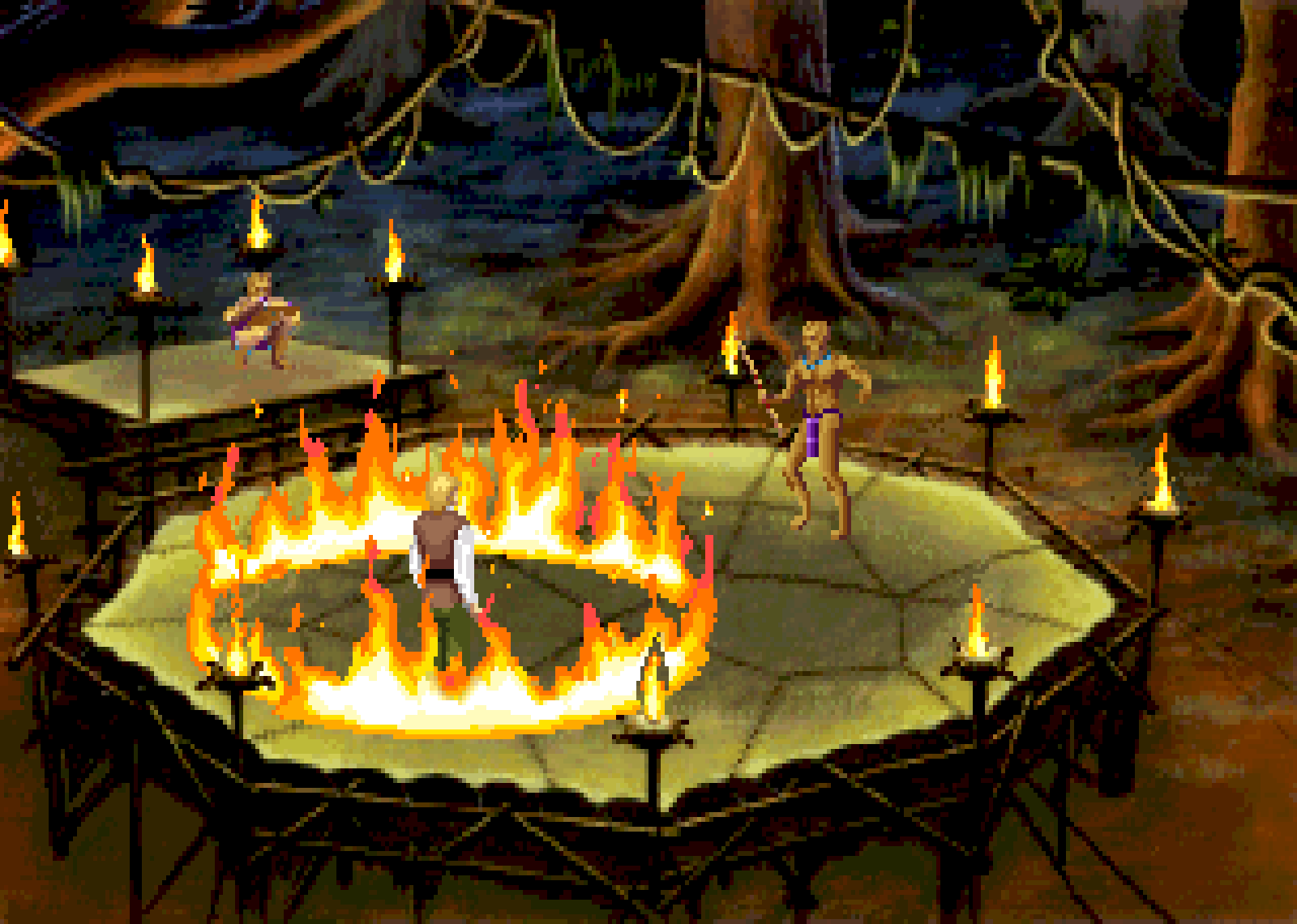
Throughout the game, there is speculation that Demons may be the cause of the war. Since the energy released by death and bloodshed allows them to enter into the world, the Demons surely have a good motive to cause massive killings. Discovering the Demons' secret scheming might have been a surprising plot twist if it hadn't been so obviously and frequently mentioned as early as the introduction. Surely it would have been more suspenseful had this plot been hinted at and revealed bit by bit during the course of the game.
Still, as long as they can only suspect Demon activity, all the Hero and his friends can do is focus on preventing the war. The key to peace lies with dissolving the hostilities between the Simbani and Leopardmen tribes, which becomes the main focus of most of the game. This requires you to familiarize yourself with the customs and motives of the different cultures, to make friends among them and promote peace. To this end, the Hero finds himself traversing the large land of Tarna on various errands. For the first time in the Quest for Glory series, the country is presented from a top-down map view, on which the Hero travels between significant locations. Also unlike previous QFG games, travelling from one end of the game world to the other takes quite some time, as Tarna is vast and perhaps too sparsely filled with locations to visit.
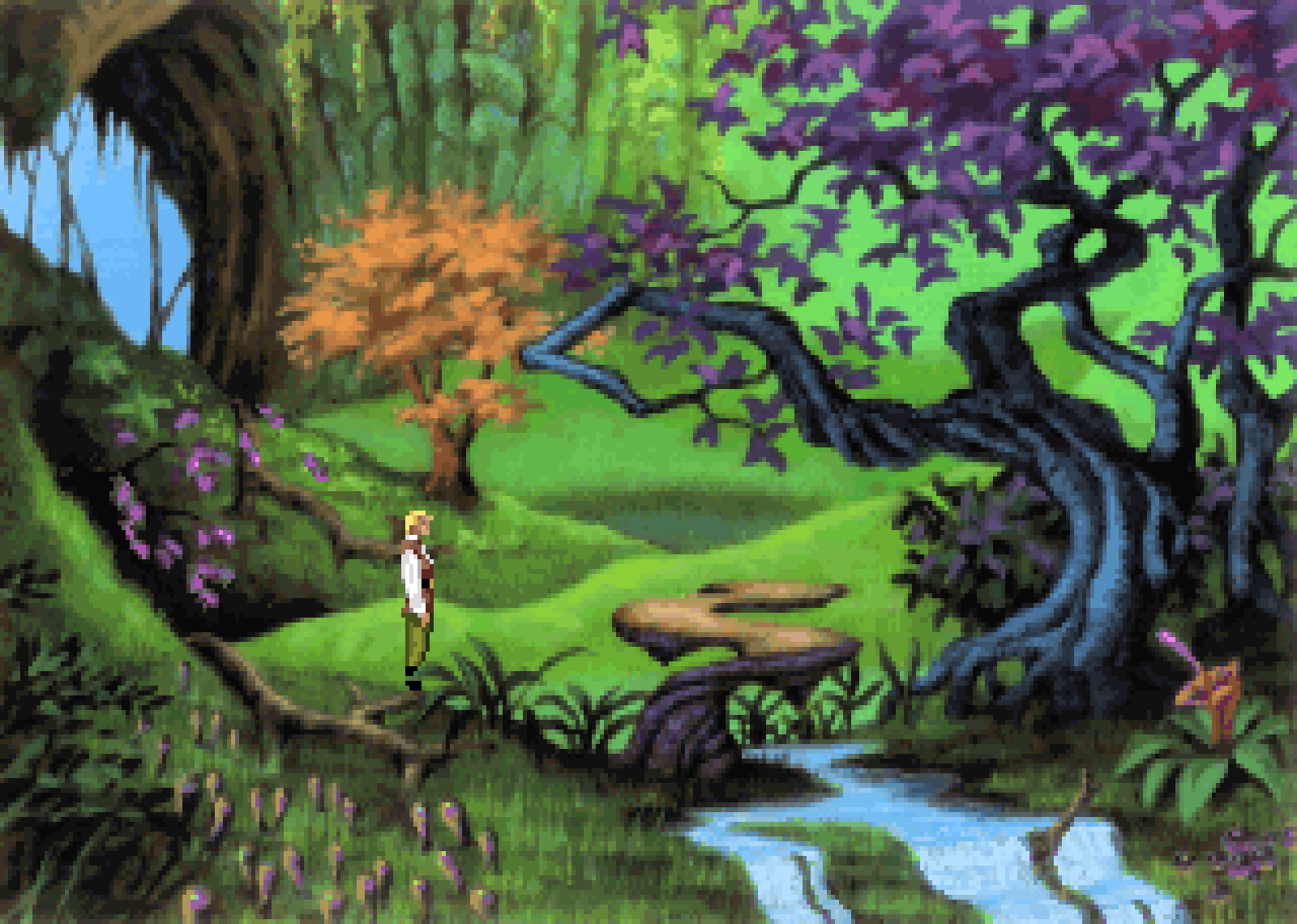
Play begins in the city of Tarna (it has become Quest for Glory custom by now to name the country and its capital city identically), which is primarily inhabited by a half-man, half-lion people called the Liontaurs. The city is densely populated and filled with stone buildings and people to visit and talk to. A day's march away lays the Simbani village. The Simbani are a primitive, nomadic people who live in huts. They take pride in being warriors and despise and distrust the use of magic. Their village is a small one, and only a few of its inhabitants can be talked to. To the east of these locations, the savannah turns into dense jungle where the Leopardmen live. The Leopardmen are practically the opposites of the Simbani, as they are all spell casters and have no respect for those with no magical ability. The Leopardmen are secretive and suspicious of outsiders, so their village remains hidden until later in the game.
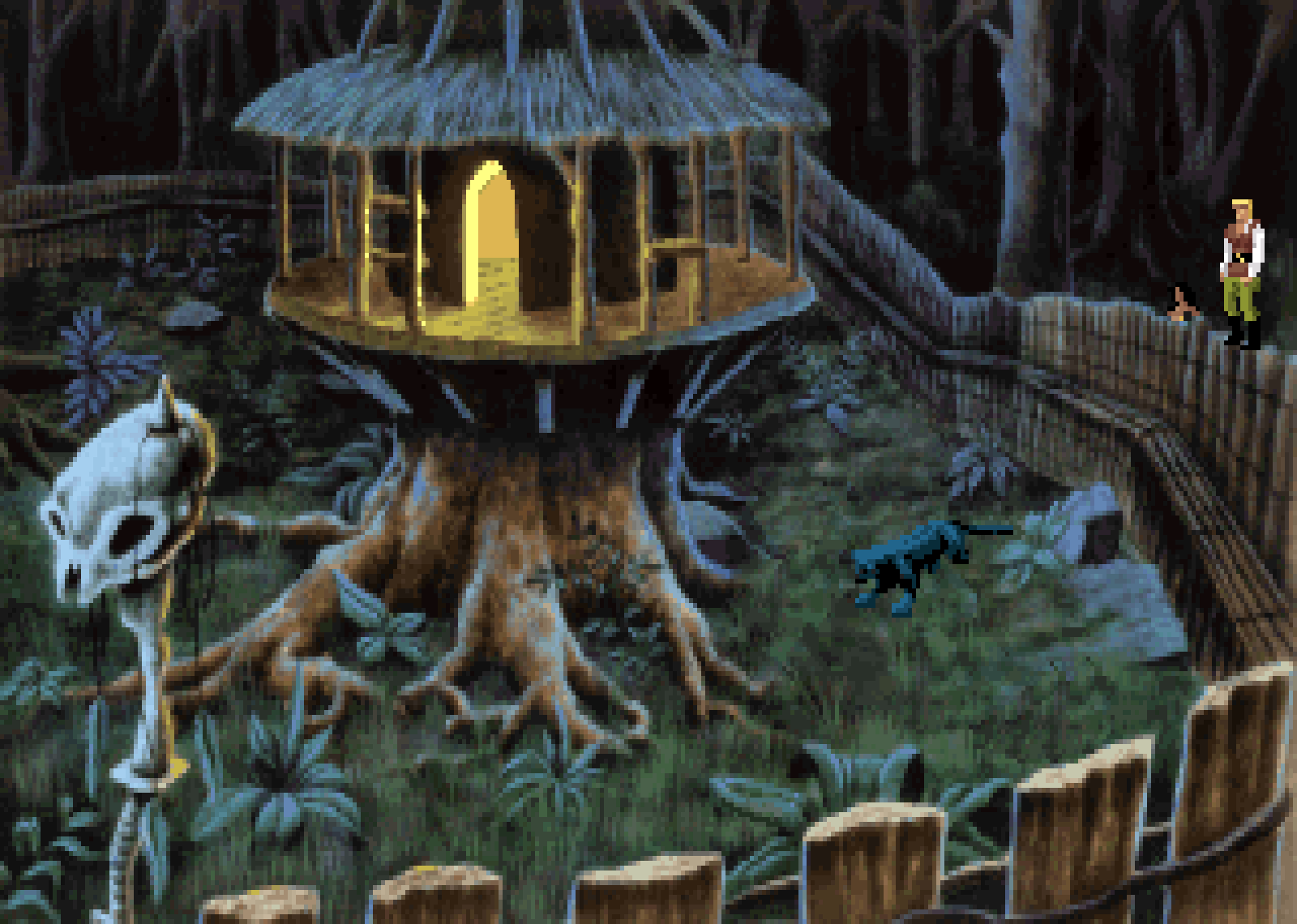
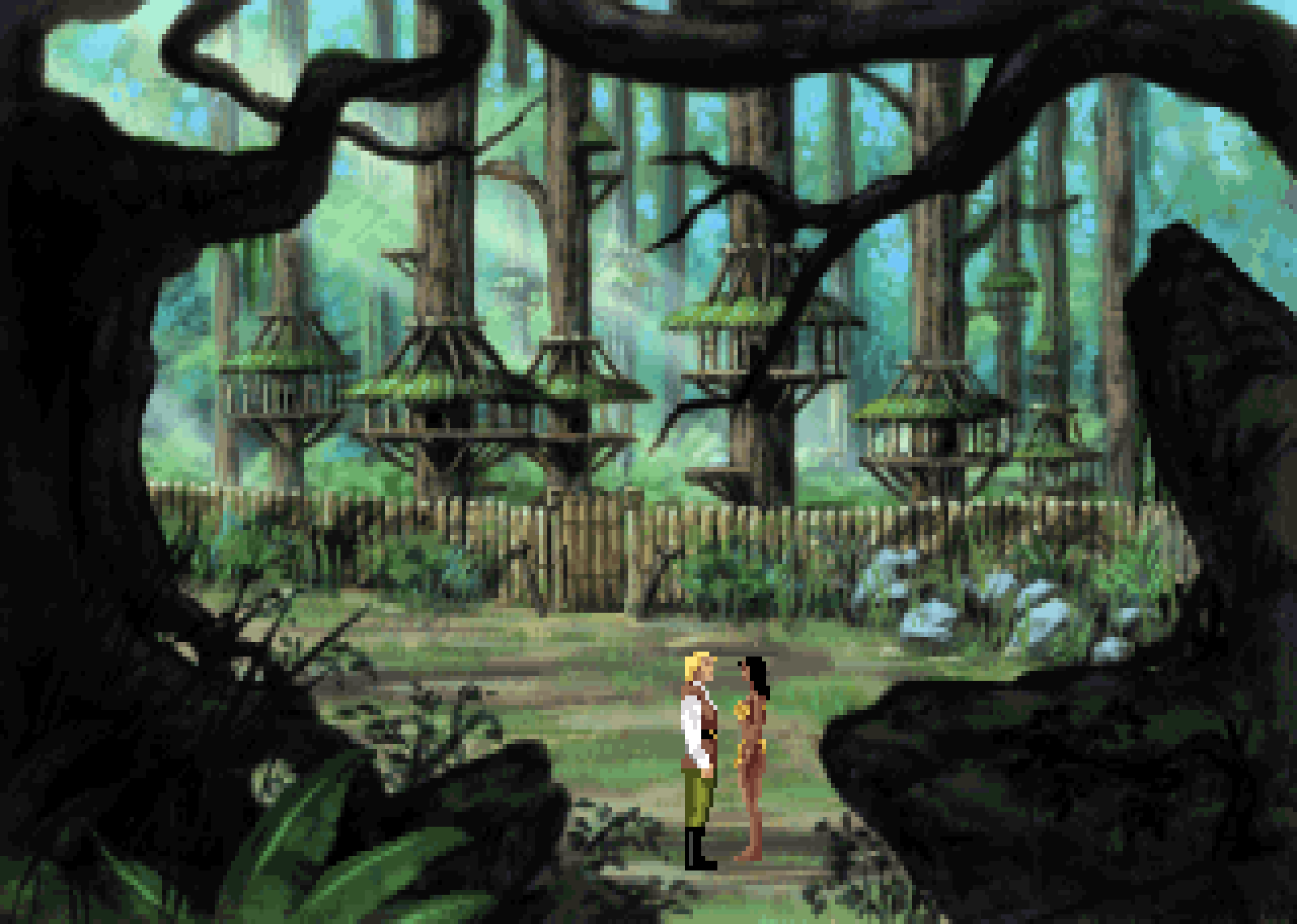
As you move through the main areas, you'll encounter dialogue in abundance, though most isn't crucial to completing the game. The many optional conversations help flesh out the game world and its cultures, but there is very little character development. As a result of this, WoW's characters are hardly memorable.
Typical of Quest for Glory games are the puzzles that can be solved differently by each of the three different classes: Fighter, Thief and Magic User. Wages of War takes the concept to the next level by offering each character an alternate path to the same goal, which is returning the stolen artefacts so that a peace conference between the tribes may be arranged. A fighter will seek the trust of the like-minded Simbani in a ritual to become accepted as a fellow warrior. The Wizard is required to prove his prowess among the Leopardmen. The Thief, who is more of a loner, takes matters into his own hands and decides to steal the artefacts and return them to their rightful owners.
These different paths offer a good challenge and do much to make QFG3 unique each time you play, yet the puzzles are neither frequent nor complex enough to keep things interesting. Most quests require you to run errands across the jungle and savannah, and these become rather repetitive. Only during more important events do we get to see some actual puzzles that require creative thinking. Even so, there aren't a lot of them, and most are rather straightforward.
The familiar skill system of previous QFG games returns without any notable changes. This means that the more a skill (like throwing, picking locks or dodging) is used, the better your character gets at it. Some skills are used only in combat, while others are necessary to solve certain puzzles. Players who don't feel like practising endlessly can lower the game's difficulty setting, which eliminates the need for lengthy exercise. Be warned, though, that this makes it possible to reach the end of the game with underdeveloped skills, which can result in a dead-end situation.
Of all the classes, QFG3 offers a meagre gaming experience for those playing as a Thief. Earlier games allowed you to plunder buildings for money and valuables. These were fun side quests that offered an interesting diversion. QFG3 lacks such side quests, so the Thief only gets to use his special skills in a few instances during the main quest. Fighters and Wizards get more side quests than the Thief, but even for them QFG3 offers too many mediocre puzzles and item-fetch errands. One important side quest for the Wizard requires him to find magical wood for the creation of his own magical staff. Enjoyable as this mission may be, the whole experience becomes rather pointless once you learn that the staff hardly has any practical use. There are also two new spells which the Wizard may learn, but these hardly offer anything new.
An interesting diversion is offered by a special bonus class, the Paladin, which could be unlocked at the end of QFG2. The Quest for Glory games allow you to import your characters from previous games, and the Paladin opens up some interesting new options. By performing honourable deeds, Paladins may gain up to four bonus powers, such as the Flaming Sword ability, which lets you wield a cool-looking sword bathed in blue flames that deals extra damage in combat. It is also possible for honourable Fighters to become a Paladin in QFG3, but only near the end of the game, which means you won't have the time to acquire most special abilities.
The shortcoming here is that the abilities aren't all that useful in the game. For example, at a certain point a character is injured. My first impulse was to help her with my healing ability, but then the Paladin mentor, Rakeesh, unexpectedly enters the room and heals her himself. Another useless ability is "Detect Evil". All this does is point out the very obvious fact that there's a monster coming after you. It would have been very helpful if you had been able to use this power to avoid encountering random monsters, as Rakeesh says he does.
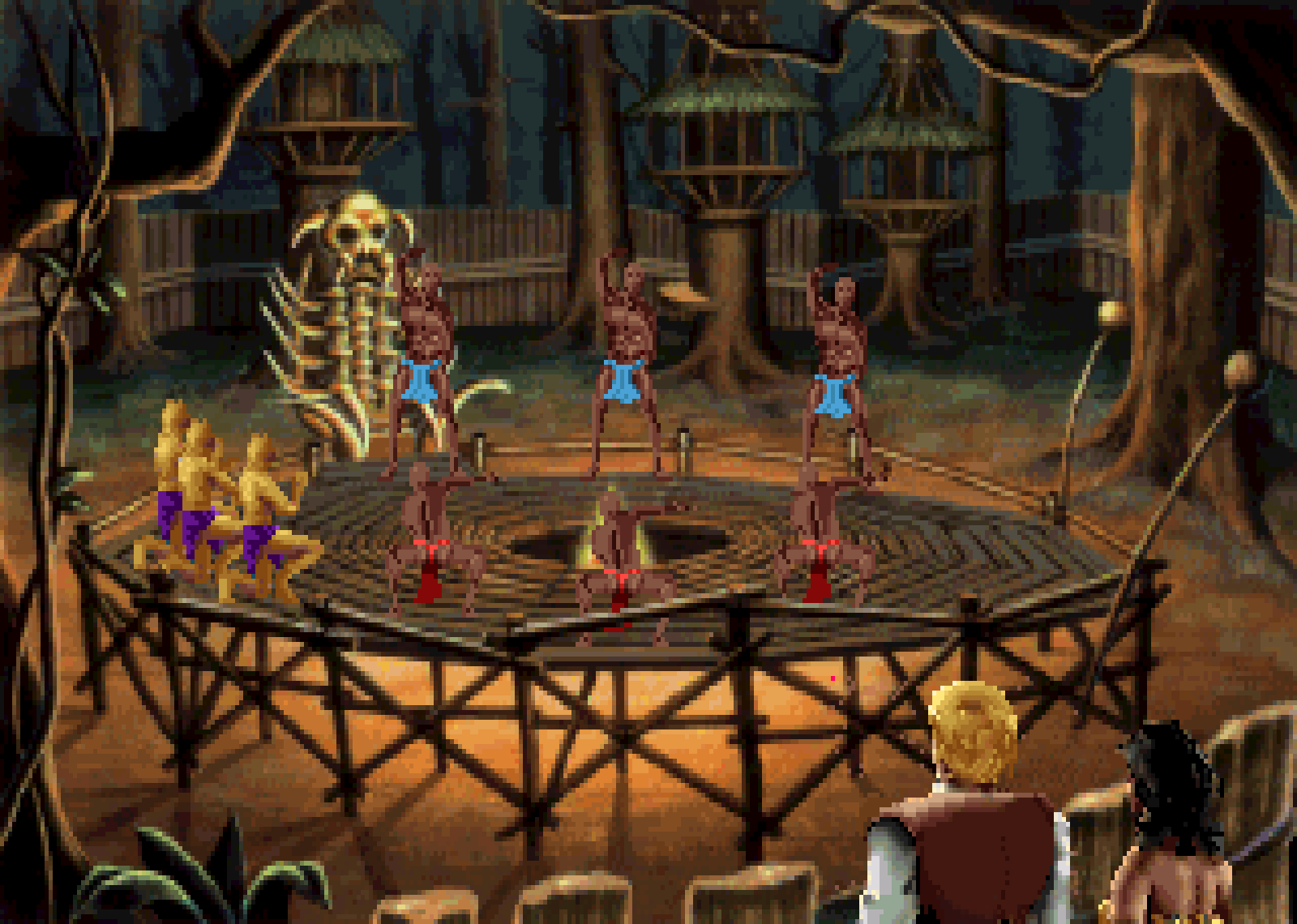
Quest for Peace? Part 3
Once again, combat is essential at key times when you're playing as a Fighter, while for Wizards and Thieves there are other solutions. A Thief or Wizard will be able to avoid every combat scene in the game, though both need to complete certain action sequences.
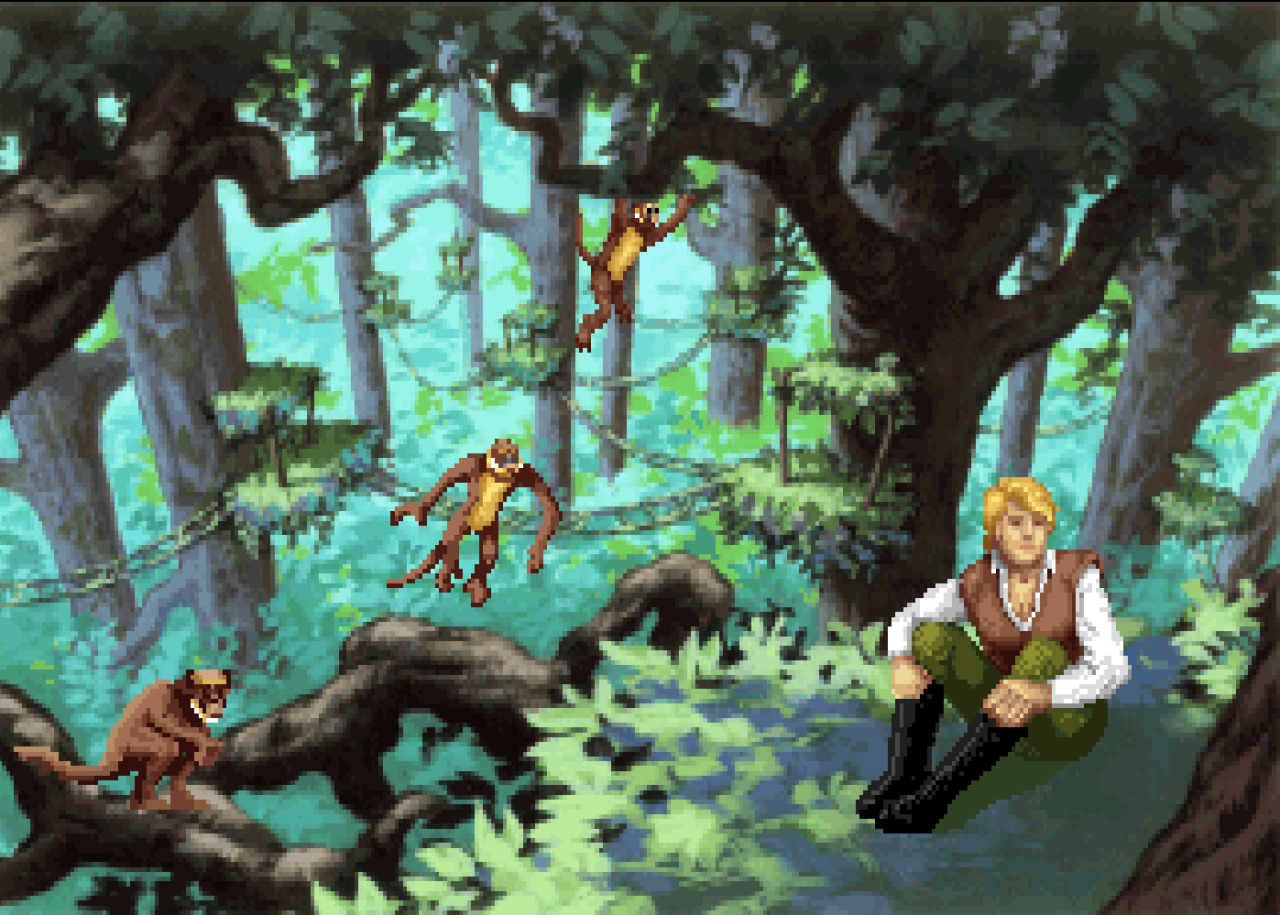
All classes will face random encounters as you traverse the countryside. When this happens, the game shifts from the overhead map view to a randomly generated savannah or jungle area. It is always possible to flee from these encounters, yet there are some problems. First, QFG3 requires you to run through many more screens than the previous games before finally being able to shake off the enemy. Further, since all jungle and savannah screens are randomly generated, you can no longer quickly run towards a nearby place of safety.
Fortunately, having high skill in the Dazzle or Calm spell may help you escape a bit quicker. Also, the stealth skill may be used while travelling, which will lower the rate at which random encounters appear.
While avoiding all combat in QFG3 is achievable, then, avoiding it becomes an annoying chore, so Wages of War isn't recommended for those primarily seeking a traditional adventure game experience.

In theory this means that you should find yourself defending against enemy attacks between attacks of your own. In reality, however, using defence still isn't a fruitful tactic, as sustaining a few hits won't kill you anyway, and being defensive only slows the battle down needlessly. Instead of improving defence, then, the new combat system just weakens the capacity to attack and as a result, I found myself getting bored quickly with combat in WoW.
The exotic surroundings of QFG 3 are brought to life by VGA graphics. The move from 16 to 256 colour graphics not only allowed for pretty hand-painted backgrounds, but also offered gradual cycling of day into night. Unfortunately, dialogue text also turns dark at night, which makes it difficult to read. And while the backgrounds may look fine, QFG3’s animation is below average on a few occasions, especially near the end of the game. In one important scene, various characters are visibly engaged in battles yet they stand frozen, weapons in hand, while the main character walks past them. I find it rather odd that the credit roll features an abundance of superfluous animations when the main game is missing some necessary ones.
Along with updated graphics, QFG3 features the point-and click-interface first introduced in the VGA remake of QFG1. Different icons allow you to look at, pick up, use, talk or walk to objects on screen. You can cycle through these icons with a mouse click, or select them from a bar hidden at the top of the screen. Through this menu you can also access your character sheet and special abilities.
Music is used to conjure up an African ambience through the use of drums and other stereotypical instruments. While the soundtrack contains some good tunes, it doesn't generate the atmosphere as proficiently as in QFG2, nor are there individual masterpieces as was the case in QFG1.
Looking at the individual facets of Quest for Glory III, the game simply lacks the inspiration that makes a game great instead of mediocre. Music and graphics are fine, but don't stand out. There are many people to talk to extensively, but too few of them are memorable. There are some decent puzzles, but there aren't enough to keep you occupied. Wages of War was created as an in-between game, and that's precisely what it feels like while playing through the series: an obstacle between Trial by Fire and Shadows of Darkness that needs to be overcome.
All of this leads me to the conclusion that QFG3 is the weakest in the series, yet that doesn't mean it's a bad game. Spending time learning about Tarna's cultures and its inhabitants can be enjoyable, and the puzzles you face in important scenes provide an adequate challenge. The plot may be predictable but has some worthwhile highlights, and QFG's unique mix of adventure and RPG certainly has an appeal of its own. There are enough positive qualities to make it worth playing, but if you've never before played a game in the Quest For Glory series, this is definitely not the place to start.